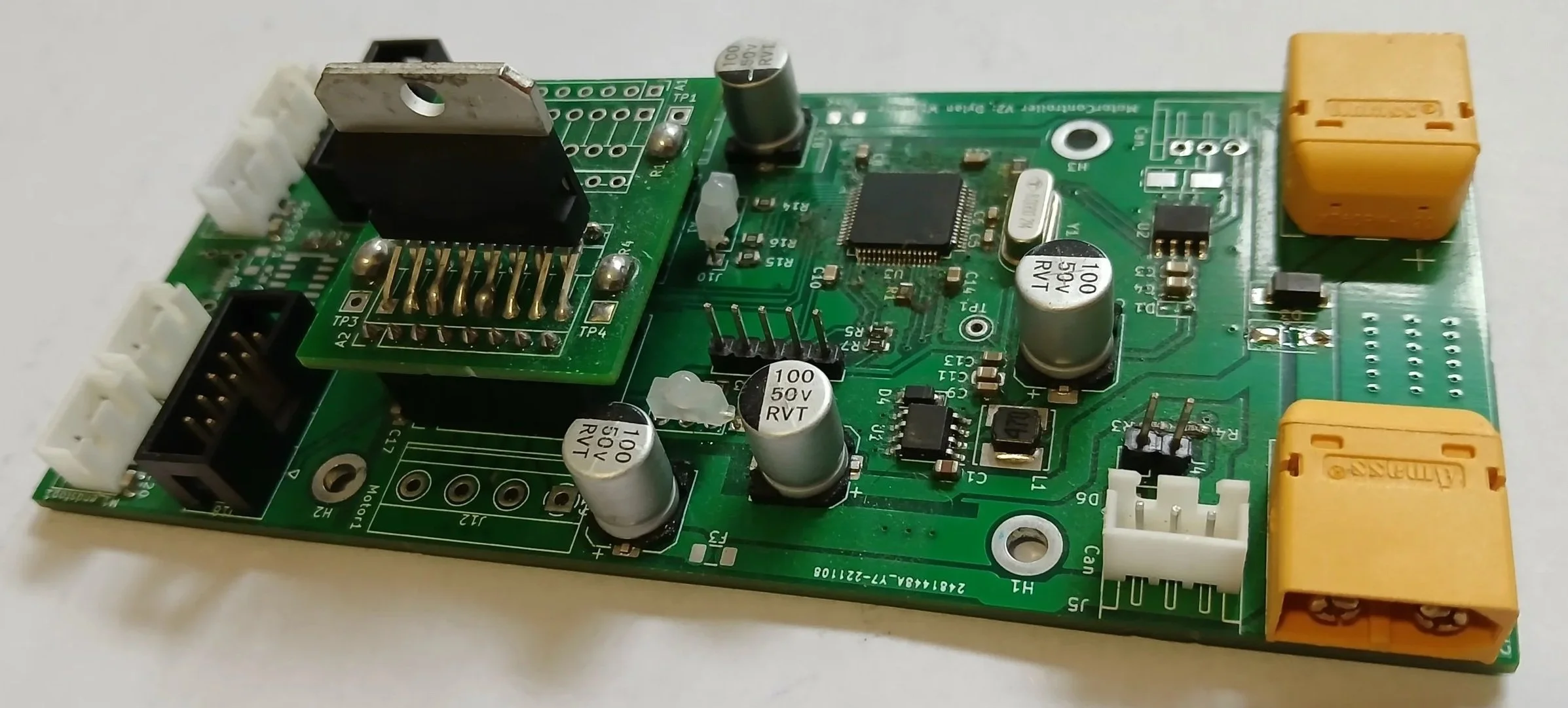
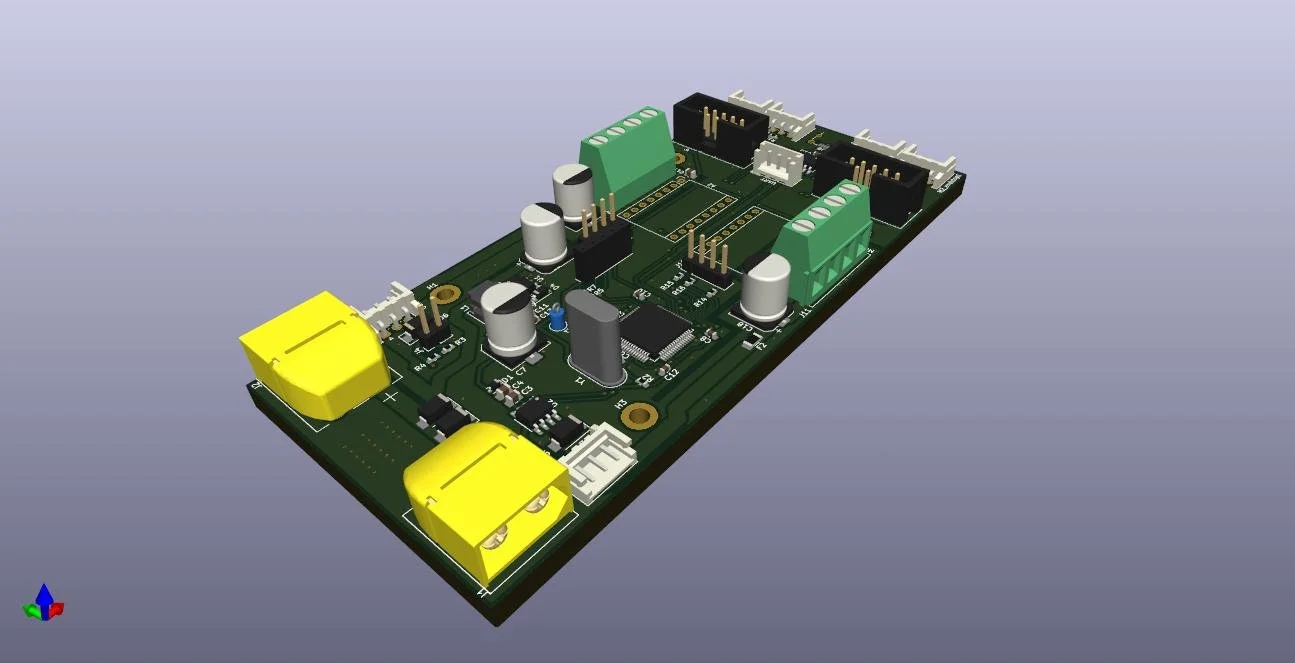
My second attempt at a motor controller this board was designed to have swappable motor driver chips (stepper motor drivers or dual H-bridge drivers) as well as communicate over CAN bus. A fun project but also taught me how much extra design effort is needed to support modularity.
This board is built around a STM32F103 micro and was designed to be daisy chainable. Both power and CAN bus had dual connectors with the idea being to simplify wiring harnesses, its other major feature was that the driver sockets (unpolluted in the render) could be populated with either a A4988 Stepper driver or a L298N driver (with the aid of a adapter PCB), both staples of the hobby electronic scene at the time.
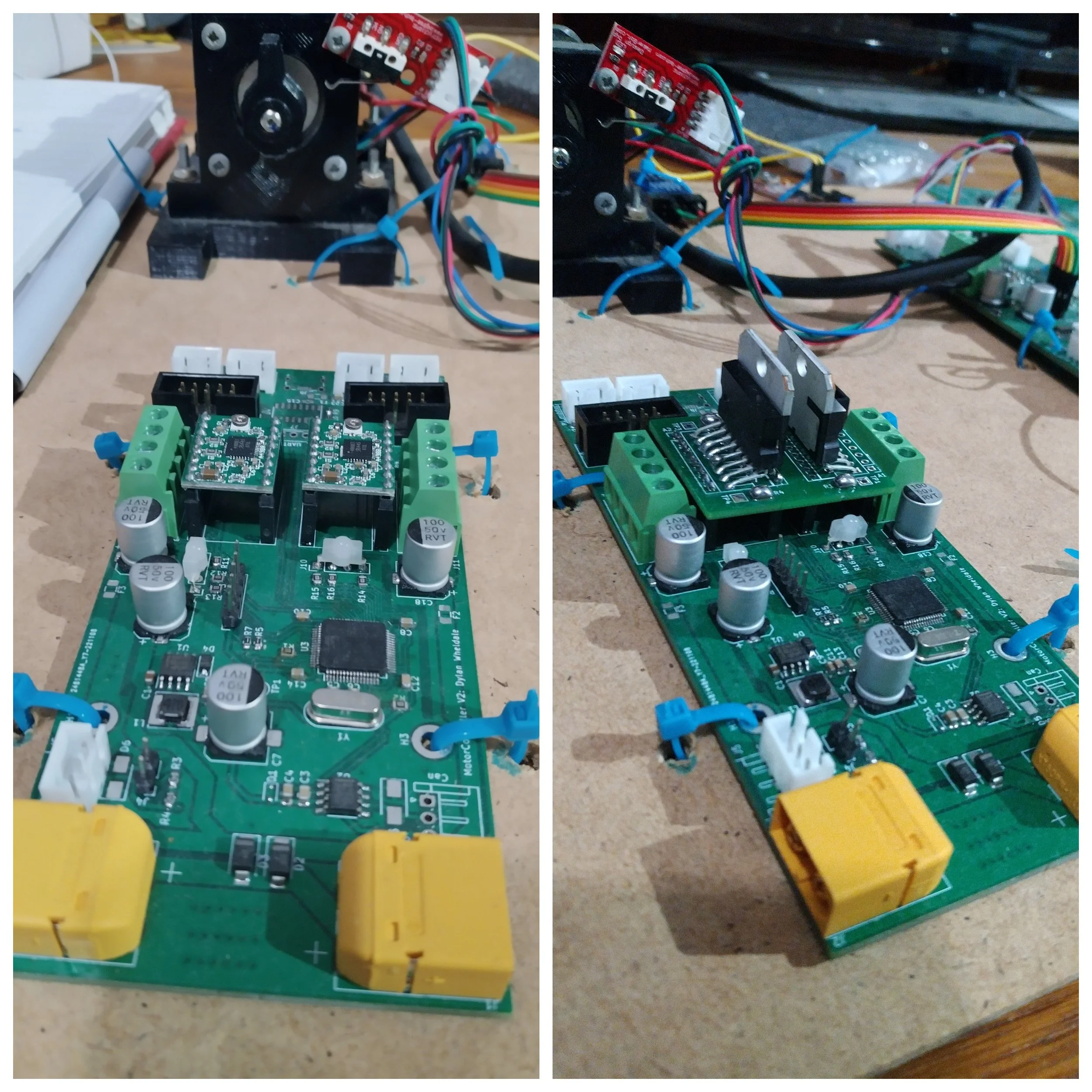
This design really suffered from poor connector placement which kind of negated the daisy chainable nature of it and made it kind of annoying for anything that wasn't bench testing of the driver it self. All that being said this was my first design with an STM32F103 and i came to really like this micro (as you will see in later designs).
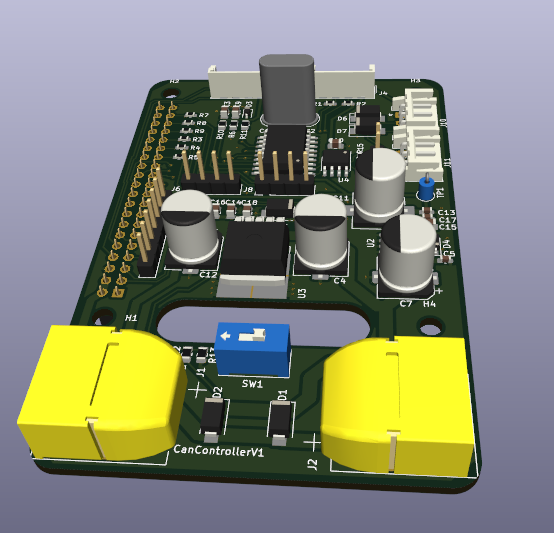
Sharing the same idea of daisy chain-ability this board was designed to mount onto a rpi and provide it with 5V from a 12V input as well as break out a CAN to SPI chip allowing the pi to talk on the can bus.